
Working with a Virtual Assistant: Common Problems and Issue Resolution

This is Part 3 of our Best Practices for Working with a Virtual Assistant (VA) series. Part 1 delves into screening, hiring, and onboarding a virtual assistant. Part 2 talks about building a healthy working relationship with your VA. For this final installment, we’ll look into some common virtual assistant problems and how to avoid or work through them.
Hiring a virtual assistant is one of the best ways to get the time you need for business-critical tasks. However, you should be aware of the very real possibility of running into issues with your VA. Fortunately, these virtual assistant problems can be avoided or dealt with quickly if identified early in the process.
We’ve identified some of the top virtual assistant problems and what you can do to avoid them.
What are virtual assistants, and what can they do for your business?

Do you feel like your business could be running so much more efficiently? Do you want to spend more time with family or do more of the things that make life enjoyable?
If so, then maybe it’s time for you to hire a VA.
Virtual assistants are highly skilled and experienced professionals who can help take care of everyday tasks such as scheduling appointments, email correspondence, social media management, customer service, data entry, and bookkeeping. These generalist VAs, also known as admin VAs, can handle a wide range of administrative or clerical tasks for clients.
Do you need an Admin VA? Here’s a list of admin tasks you can outsource
Some virtual assistants are considered specialists, which means they have a specific technical or creative skillset. For instance, social media VAs are experts in social media marketing and management. Meanwhile, web developer VAs are skilled in coding and programming, website development and maintenance, and related tasks.
Discover the many types of Specialist VAs and what they can do for you
In a nutshell, a virtual assistant is a business support services provider who works remotely. The virtual part means they provide their services from another location or country other than where you’re located.
You may think hiring a VA is out of your budget, but these skilled professionals often work on an hourly or per-project basis, which makes them affordable for any size company. Hiring and managing a VA doesn’t have to be difficult either! There are many best practices for hiring and working with a virtual assistant that will ensure everything runs smoothly from start to finish.
Virtual assistant common problems

Just like working with an on-site employee, working with a virtual assistant isn’t always easy. Various issues can arise when you’re working with someone you can’t interact with in person.
The best way to avoid virtual assistant challenges is to find the right VA. This is someone who:
- has the skills and knowledge your business requires, and
- is well-equipped with the tools and mindset for remote work.
Below, we’ll discuss the common virtual assistant problems you may experience when working with a VA for the first time. We’ll also touch on some of the best practices for hiring, onboarding, and managing a VA.
These are some of the most common virtual assistant problems new clients encounter:
✗ Time difference
Contrary to popular belief, one of the biggest benefits of working with a VA is the time difference. A remote worker on the other side of the globe can get things in order as you sleep so that everything is ready for you when you start your workday. An eCommerce business can take calls and accommodate inquiries 24/7 without you having to work past 5 PM.
However, there are also some disadvantages to having a significant time difference. For instance, some clients forget that virtual assistants are not mere robots who can work for 16 hours a day without sleep. They are human, and if you’re not mindful of their working hours and insist on working with them on your usual schedule, it would result in burnout for them.
✗ Scope creep
When you’re not working with employees from company headquarters and have limited visibility, it can be difficult to clarify their job’s exact nature and scope. You might not realize that your virtual assistant has had to take on a wider variety of tasks than initially assigned. It can get out of hand when you have someone doing things that were never agreed upon. This can easily lead to burnout, disagreements, and a virtual assistant leaving your service.
✗ Doubts about productivity
Because virtual assistants work remotely, it can be difficult to figure out how productive they are. You might trust them yet still feel uneasy about what exactly they’re accomplishing each day. This can lead to micromanaging, which can make your virtual assistant feel uneasy and demotivated.
Stay on top of tasks with these project management apps
✗ Limited communication
Communication is probably the biggest challenge you will encounter, especially if you hire someone without proper training or not a lot of experience working remotely. A VA who does not communicate well creates many headaches, including delays in work and loss of important information. Without clear communication channels, both clients and virtual assistants are more likely to become frustrated. When this happens, both sides become unable to collaborate, and work quality can drop.
These are the top communication tools VAs around the world swear by
✗ Company culture mismatch
One of the most common virtual assistant issues encountered by those new to remote outsourcing is that their company culture doesn’t take remote workers into account. When this happens, their VAs end up disconnected and unable to participate in company endeavors. Virtual assistants have to keep up with company issues, and if they’re not integrated into the team, you risk them feeling left out.
✗ Short VA lifespan
Some virtual assistants stay with your business for a long time; others do not. There are several reasons why virtual assistants can leave, and in some cases, it’s out of their hands. However, now that remote work has become more commonplace, virtual assistants are in high demand, and a highly skilled VA can easily find better career opportunities. Losing someone who has become integral to your company can be devastating to your business.
How to fix and prevent common virtual assistant issues

Working with a virtual assistant is an excellent way to get a higher quality of work done without the added stress. However, it’s not without its challenges. And if you don’t know what you’re doing, hiring a VA can leave you feeling frustrated instead of confident and efficient.
Here’s how you can fix or prevent the most common virtual assistant problems:
✓ Leverage the time difference
Virtual assistants can work while you sleep or when you’ve already logged off work. This means that they can help you and your business be more productive than workers in the same time zone as you, i.e., those who work “normal” hours. Instead of seeing the time difference as a potential issue, look at it as an opportunity to get more done in less time.
Depending on the nature of your business, you can have someone complete a specific task in the early morning or late evening. This allows you to respond to clients or process orders 24/7, maximizing revenue and improving customer satisfaction.
✓ Define the scope
If you want virtual assistants to do your work for you, it’s important to define tasks right down to the smallest details possible. Otherwise, there will be room for misunderstanding and scope creep.
To avoid scope creep, create clear guidelines for your virtual assistant, including the extent of their work, the KPIs (key performance indicators) and metrics they need to report, when each task is due, and the timelines for each project. Be as specific as possible while still leaving room to change the details if necessary.
For example, one of your virtual assistant’s tasks may be answering customer inquiries and resolving issues through email and chat. Your guidelines should also specify that they need to send you a report at the end of each day that includes contact information for all customers who were contacted, plus notes on how many issues were resolved and how many are still open.
✓ Start with the end in mind
One of the most common ways VAs fail is by not having objectives and targets established before starting a new project. This is critical because it helps you evaluate their performance as well as set realistic expectations.
As virtual assistants work remotely, both VAs and their clients must be very clear about their goals. Your VA should know exactly what tasks are expected of her and have a complete picture of what needs to be done.
Be clear about the virtual assistant’s responsibilities and your expectations, including performance standards. Virtual assistants can be given “quotas” of particular activities to complete each week or month. This will help them feel more comfortable with their responsibilities and allow them to focus on the work itself.
When VAs understand their client’s expectations, they’ll be able to complete projects successfully without requiring a constant stream of instructions or clarification. There will be no confusion about who has ownership of certain projects or information. They can spend extra time developing innovative strategies and ideas, improving their services overall.
By communicating your expectations, setting measurable and reasonable goals, and using a time tracking app for accountability, you’ll have a better working relationship with your VAs, be able to track their progress, and avoid having to question their productivity.
Discover the recipe for a healthy VA-entrepreneur relationship
✓ Prioritize frequent communication
A common reason behind virtual assistant problems is a lack of communication. While virtual assistants work independently, they should still be able to communicate with you about potential problems, solutions, and questions. A VA who’s not getting the guidance or feedback she needs will get frustrated, and her work will suffer.
Regular communication, whether through calls or instant messaging apps, is vital. This is especially important when someone first starts working for you. Set hours during which virtual assistants can call you and always make yourself available during those times. Schedule a regular weekly meeting for quick check-ins on your VAs’ progress on tasks as well as on their general wellbeing.
When VAs contact you with a problem, try to find out why they’re having the issue before jumping to a solution. This will give you and your VA a chance to troubleshoot solutions together and understand any underlying problems.
[activecampaign form=66]
✓ Create a hybrid-ready company culture
If most of your team members work on-site and you’re hiring virtual assistants for the first time, follow these tips to ensure a hybrid-ready culture at the workplace:
- Make it clear that remote workers are part of the team. As part of the onboarding process, introduce your new VA to the rest of your staff. Invite them to engage in non-work banter, virtual happy hours, and other social events with your team.
- Incorporate virtual assistants into the workflow from the beginning. Instead of treating them as second-class entities, integrate virtual assistants into your team’s processes as smoothly and intuitively as possible.
- Build remote working best practices into the company handbook. This will encourage everyone to be more virtual-friendly, and it will help virtual assistants feel like they’re a part of the organization.
- Use a project management system to help both on-site and remote team members keep track of projects and have easy access to information.
- Make sure virtual assistants receive recognition for their contributions, just like on-site team members.
- Virtual assistants work best when they understand their role in your business, so make sure that’s clear by including virtual assistants in your team’s regular team meetings or sending virtual assistants weekly reports on company activities.
✓ Nurture the relationship
One of the biggest hesitations business owners have about hiring a VA is how tenuous the relationship seems. Another is the time and effort it might take to build a working relationship beneficial for both parties.
But it’s really not that difficult to nurture the relationship once you make your virtual assistant a vital part of your team. Here are some key steps you can take to increase the longevity of the working relationship with your virtual assistants and make them happier while they’re by your side.
- As virtual assistants become an integral part of your business’s activities, build in regular check-in times to have conversations about the progress they’re making and how they think things are going. When virtual assistants feel like there is accountability and openness, they’re more likely to stay motivated and do a good job. This will, in turn, improve your relationship.
- Provide incentives for quality work. One of the best ways to show your appreciation for your VA’s hard work is to provide incentives such as a performance bonus, gift card, or an added day of paid time off. This will show virtual assistants that you value the job they’re doing, and any incentive increases their level of dedication to your organization.
- Build a culture of appreciation, and remember to be genuine and specific in your expressions of gratitude.
- Help your VA achieve work-life balance. If your VAs spend too much time working, they won’t be able to find the balance in their lives that they need for good health and wellbeing. Let your VAs know that you don’t expect them to work outside of their contracted hours and that they can take time off when necessary.
- Finally, be fair and conscientious with compensation. Treat virtual assistants as valued employees, and they will remain loyal.
✓ Hire virtual assistants strategically
The VA industry is booming, and any entrepreneur can find a virtual assistant for almost any task with just a quick Google search. However, not all virtual assistants are created equal, and if you’ve never hired one before, you can end up losing instead of saving time and money.
Here are a few tips to keep in mind when hiring a virtual assistant for the first time:
- Avoid virtual assistants who claim to be good at everything. It’s better for VAs to focus on one area and do it well than attempt something beyond their skill level.
- Research the virtual assistant’s background and experience to learn about their qualifications. If a candidate has no virtual assistant training or experience, they might not be the best person to hire. You’ll have to spend a lot of time training them to be proficient in remote work or on how to do the work you need help with.
- If you don’t have much experience working with VAs, it can be tempting to hire based on the hourly rate rather than the level of skill and ability. Don’t fall into this trap. Instead, base your decision about which VAs to hire on the results they have achieved for previous employers.
- If you can’t personally interview VAs, use a reputable virtual assistant recruiting agency to do interviews and background checks for you. Ask for testimonials from previous employers so you can assess each candidate’s skill level.
Need stronger safeguards for your virtual team? Center-based VAs are the answer
Is it worth hiring a virtual assistant?
If you’re feeling overwhelmed by the day-to-day tasks of running your company, hiring a VA might be one of the best business decisions you make. But before making that decision, there are some things to keep in mind about working with a VA so as not to encounter any virtual assistant problems. Keep these best practices in mind to avoid the common pitfalls and overcome the challenges of working with a virtual assistant.
If you’re ready to take your business to the next level and want more time for tasks that move the needle, we can help. Our Business Growth Experts are happy to give a free consultation to help you determine your staffing needs and whether or not hiring a VA is the right path for you. Request a FREE Business Growth Session today!
READ MOREWorking with a Virtual Assistant Best Practices: Part 2 – Performance Tracking, Monitoring, and Incentivizing

Now that we’ve gone over how to screen, hire, and onboard a virtual assistant (VA), let’s talk about the next stage: working with a virtual assistant.
As many business executives will attest, virtual assistants are an invaluable asset. When you compare a virtual assistant vs an employee, you’ll find that VAs offer much of the same in terms of skills and competence but cost significantly less. These multi-skilled and dedicated professionals help you lower your operational costs, save you from the drudgery of menial tasks, and allow you to do what you do best: run your business.
But while hiring a virtual assistant solves many workload-related challenges, it does have a few drawbacks. One is that monitoring a virtual assistant’s productivity can be tricky. Another is that people who work remotely can sometimes feel isolated.
Because virtual assistants are not in the office with you, you can’t stop by their desks to check on a project or chat about the latest Netflix hit as you wait for a meeting to start. If you don’t consciously create opportunities for engagement online, you’ll miss out on those fleeting but crucial moments that help build and solidify a relationship.
So how do you make sure that your VA is doing the work that you’re paying for? And doing it correctly? How do you keep your VA engaged and motivated? Here are some tried-and-tested tips for performance tracking and for monitoring and incentivizing your virtual assistant.

Tracking Your VA’s Performance
Making sure that your virtual assistant is productive is an ongoing process that starts with setting clear expectations. Here’s what you need to do:
Define goals and KPIs
Setting measurable and realistic objectives helps your virtual assistants prioritize their tasks, organize their schedules, and understand the goals for each project. Make sure that metrics and key performance indicators (KPIs) are written down and monitored daily. According to Dr. Gail Matthews, a psychology professor at the Dominican University in California, people are 42% more likely to achieve their goals when they take the time to write those goals down.
KPIs also allow you to gauge your VA’s productivity and evaluate the impact of the VA’s work on your business. Your KPIs should be as specific as possible and should reflect your overall goals for the company. Common KPIs include conversion rate, customer retention rate, leads generated, and total sale value.
Set clear deadlines
Help your VAs meet deadlines by clearly defining what needs to be done every week. It’s also important to set clear timelines for every project. Your virtual assistants will be better able to manage their time and be more efficient when they know precisely when tasks should be completed and when every deliverable should be in your inbox. Setting deadlines also helps you measure progress and boost your staff’s productivity.
Communicate with your virtual assistants to make sure that timelines and deadlines are achievable. While efficiency is king, you don’t want to compromise quality. Make sure to set target dates that allow your virtual assistant enough time to get things done to your standards.
Set clear boundaries
Set your VA’s working hours — and make sure you both follow them. According to this Harvard Business Review article, it’s time for business leaders to rethink what are considered “high-performing” attributes in remote workers. These include working long hours, working during weekends, and answering emails and instant messages after office hours.
Pushing VAs to their limits will only result in burnout. Let your virtual assistants know that while you expect them to do their best, it’s also OK to slow down and take a mental health day occasionally.
Monitoring Your VA
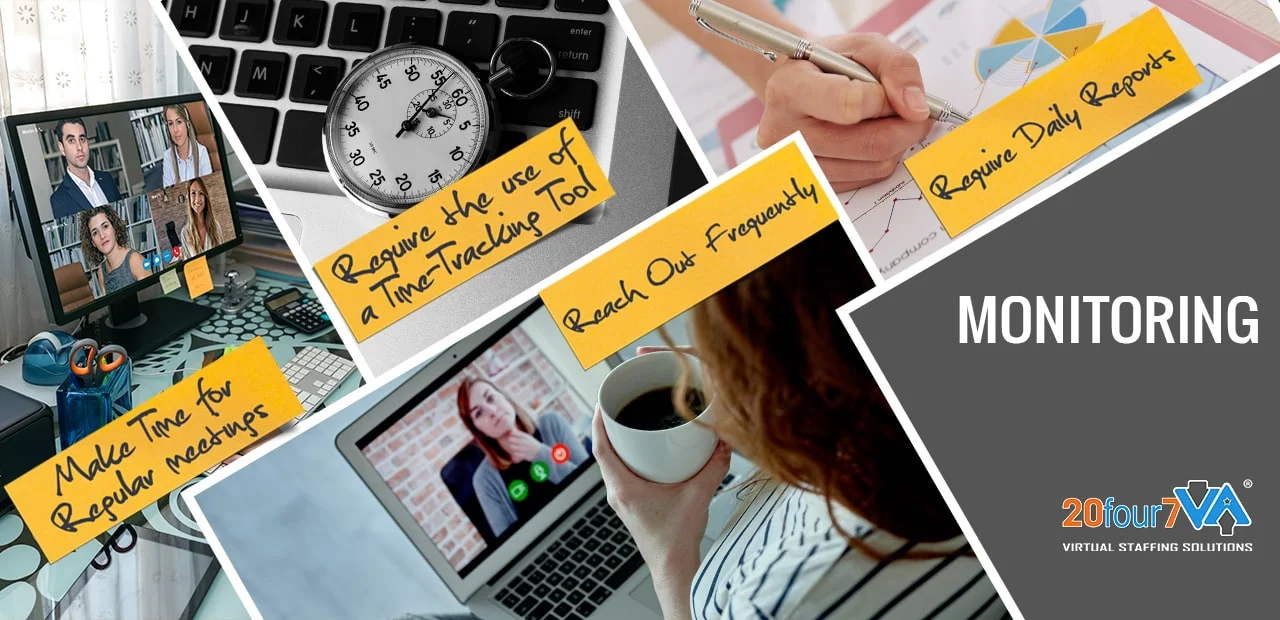
You need to monitor your VAs not just to check their efficiency but to keep tabs on their morale and check for signs of burnout. Follow these best practices for monitoring your VA:
Require daily reports
The easiest way to gauge your VAs’ productivity is to have them create a report detailing the tasks they performed during the day.
An end-of-day report is useful in many ways. Besides helping you keep track of your VA’s activities, it keeps you updated on the status of projects and tells you how much time is being spent on them. End-of-day reports also serve as historical records that can be reviewed to evaluate an employee’s performance or get insight on a particular project or interaction with a client.
Make time for regular meetings
Research shows that boosting engagement for remote workers results in higher productivity and creativity, lower turnover, and even reduced costs. One of the most effective ways to keep VAs and other remote workers engaged is to create an internal communication system that keeps everyone informed and connected.
Schedule weekly 1:1 meetings with your VA so you can talk about the tasks for the week, evaluate the progress made during the previous week, discuss how to overcome any challenges the VA is facing, and make sure there are no misunderstandings. A regular all-hands meeting is also a great way to keep your entire staff aligned with company goals, make sure everyone is on the right track, and foster strong bonds among staff members.
Require the use of a time-tracking tool
When you’re working with virtual staff, you have to take extra steps to make sure that they’re doing the work you’re paying for. As you’re not working in the same office, the best way to do this is to use virtual assistant tracking software that monitors their performance in real-time.
How does virtual assistant tracking work? A virtual assistant time tracking app allows you to track your VA’s hours, keep tabs on the amount of time they spend on projects, and see what websites they’re accessing while they work. Time-tracking apps also let you see your VA’s progress by taking screenshots of their desktop at regular intervals. These programs also typically have an idle detection feature that automatically clocks out your VA when no keyboard or mouse movement is detected. This ensures that your VA was not idle during the hours billed.
Reach out frequently
Monitoring your virtual assistant’s emotional state is just as important as tracking their hours. Why? Because employees who are happy and engaged tend to be productive, while those who are stressed or who feel anxious and disconnected tend to be ineffective.
Set up a group chat for non-work banter so that your VAs can stay in the loop and get to know the rest of the team. Check in and ask them about their day, how they’re coping with their workload, and what their obstacles are. Of course, not all employees will be forthcoming when asked these questions. Consider setting up anonymous feedback surveys so that everyone can voice their needs.

Incentivizing Your VA’s Hard Work
You’ve defined expectations and are monitoring your VA’s productivity and engagement. You’re off to a great start! Now you just have to keep your VAs motivated by incentivizing their hard work. Here’s how:
Recognize their wins
Recognition is one of the most powerful motivators in the workplace. It’s even more important for those who work remotely. While virtual assistants are paid contractors and are expected to accomplish every task assigned to them, positive feedback and praise will show them that you appreciate their work and motivate them to put in more effort.
Take it up a notch by publicly acknowledging your VAs when they meet a goal or celebrate a milestone. Something as simple as an announcement in your staff chatroom can go a long way towards making your VA feel valued.
Celebrate with simple gifts
Aside from publicly recognizing your VA’s accomplishments, you could also show your appreciation with something tangible. Consider sending a card signed by the entire team or a gift card from a store in your VA’s locale. You can also have flowers or a birthday cake delivered to your VA’s home. People love receiving simple but thoughtful treats — and your VA is certainly no exception!
Provide opportunities for learning and development
Most VAs are eager to learn new skills and expand their knowledge. Give them the opportunity to do so! Not only do you incentivize your VA’s good performance, but you also benefit your company by increasing your workforce’s skillset. Make it more economical by subscribing to a membership plan that gives your entire office access to online training courses.
Final thoughts
Don’t leave your VA hanging after you hire and onboard them. Without defined parameters, you won’t be able to evaluate your VA’s contributions. It will also be harder to determine whether or not hiring a virtual assistant was worth it. Take the time to define goals, timelines, and boundaries, and recalibrate as needed.
Similarly, if you don’t track your VA’s working hours, encourage them to engage, or provide incentives for hard work, you’ll miss out on the opportunity to maximize their potential and ensure a good return on your investment. Try to strike a balance between tracking your VA’s productivity and trusting your VA to do the work without supervision. And if goals aren’t being met, don’t hesitate to start a conversation and see where you need to go from there.
Next up: the third and final post in this series tackles the most common problems clients encounter and how to resolve them. Subscribe to the blog to receive this and the latest blog posts straight in your inbox!
[activecampaign form=68] READ MORE