
COVID-19 Has Put Remote Work to the Test

As the novel coronavirus disease (COVID-19) spreads rapidly across the globe and the death toll continues to rise, more and more countries have taken emergency steps to try and keep their citizens safe and healthy. Entire cities, even countries, are on lockdown. Schools have been closed for the time being, mass gatherings have been banned, and companies have enforced mandatory remote work to promote social distancing.
Businesses around the world have responded to the pandemic by urging their employees to remain home, forcing millions of previously office-based workers to quickly adapt to a WFH (work from home) setup.
From cubicle to couch
While an increasing number of workers have joined the remote workforce over the last decade, never before has WFH and distributed teams been tested on this scale. Though the reason for this massive remote work experiment is unfortunate, it has nonetheless created a rare opportunity to prove that telework benefits not just professionals who desire flexibility but also business owners and even those whose jobs cannot be done remotely.
Many have noted that the pandemic has brought the vulnerabilities of office-based business operations to light. As a result, we can expect that when things go back to normal, home offices will be here to stay and a huge shift towards remote work will be felt across all industries.
Here’s why that will be the case:
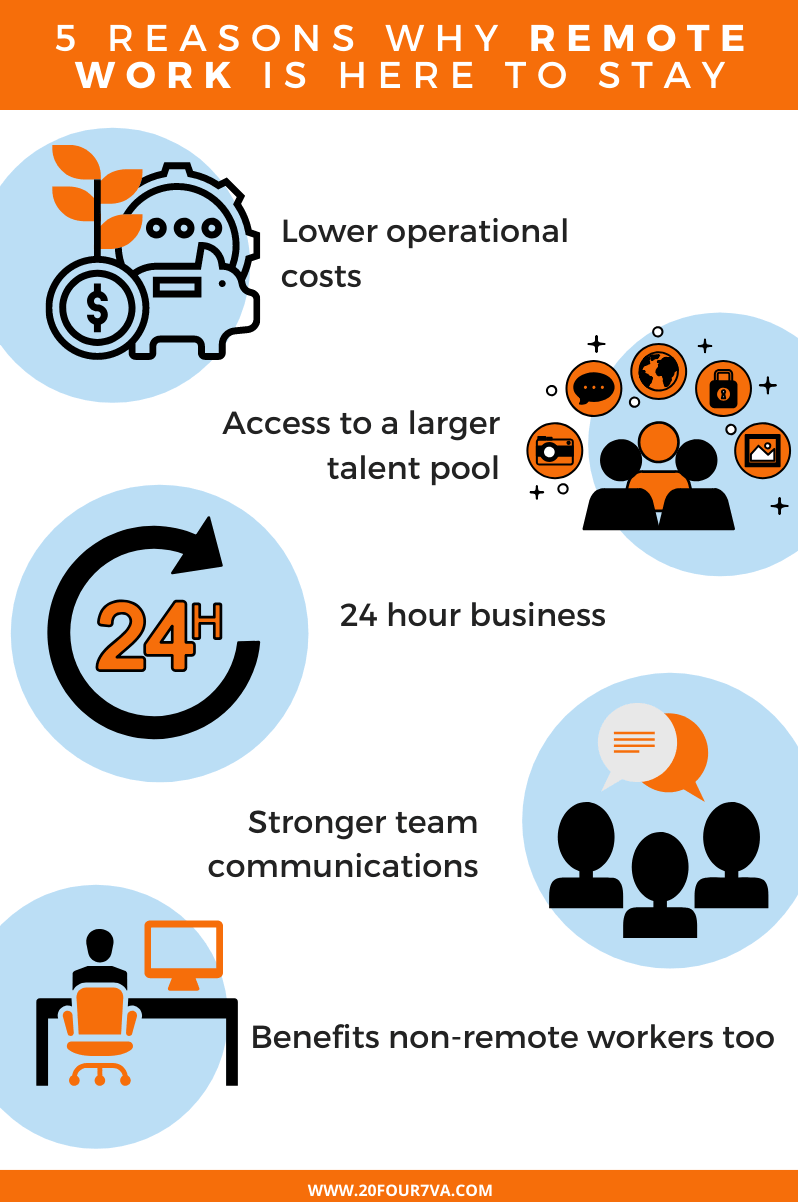
Remote work allows businesses to slash operational costs
Most companies spend between $100 and $1,000 per month per employee on rent. Add to that the cost of office equipment, furniture, and office supplies. Companies that don’t pay for these things can funnel the savings into business development projects or pay their workers above-average wages, allowing them to attract top-tier talent.
Remote work gives businesses access to a larger talent pool
The best person for the job may be in another state or country. Having access to home-based workers or digital nomads gives businesses the opportunity to work with people who are highly qualified but are unable to come to the office. These include parents with small children, people with disabilities, and those who are located across the globe.
Remote workers allow businesses to stay open 24 hours
Having a team scattered across different time zones allows businesses to stay open and respond to customer inquiries all day and night. A virtual assistant in the Philippines can answer calls and emails, organize receipts, and pay bills while a small business owner in New Jersey sleeps. A content writer in Buenos Aires can hand over a project to a graphic designer in London, who then turns it over to a social media marketer in Sydney — all in one day.
Remote work strengthens team communications
When people work from home, they don’t have the luxury of relying on body language or facial expressions for communication cues. They don’t chit chat over a shared meal or shoot the breeze in the office pantry.
In the absence of face-to-face interactions, remote workers make a more conscious effort to communicate. This means overcommunicating or writing (and speaking) more than they normally would to better clarify expectations, tasks, and roles. In this respect, scattered or remote teams can actually be better at communications than office-based teams.
Remote work benefits non-remote workers too
Teleworking is often criticized as a solution that only benefits white-collar workers. While it’s true that not everyone has the privilege to take their work home, telework also impacts those who are unable to work remotely.
For example, remote work eases traffic congestion, decreasing the amount of time office-bound workers spend on the road. Because they don’t have to move to highly urbanized areas for employment, telecommuters also help ease congestion in in-demand urban areas.
Remote workers tend to frequent coworking spaces and coffee shops, helping stimulate growth in those industries. Remote work also has a meaningful impact on the environment, as there’s less land taken up and energy consumed when businesses don’t have to rent space for all of their employees.
As COVID-19 wreaks havoc on the economy and upends our way of life, some employers may see WFH setups as a temporary solution in a crisis.
But every catastrophe is also an opportunity for change. This time, one of the lasting impacts will be that remote work will finally be recognized as an improvement on office life, a necessary business continuity measure, and a way to breathe life back into the economy.
READ MORE20Four7VA Announces Business Updates in Response to COVID-19
20four7VA, one of the leading virtual staffing solutions providers in the eCommerce industry, has provided an update on the measures it has taken to ensure the health and welfare of its employees and to guarantee business continuity during the coronavirus disease (COVID-19) pandemic.
In an email sent to clients, President and CEO Catherine vanVonno assured clients that the company is well-positioned to continue supporting both its clients and its VAs (virtual assistants) around the world.
“I wanted to reach out and let you know that we are committed to keeping our 20four7VA family safe and to continue serving our clients with the highest standards,” Vanvonno said. “I know we all have fears about how the COVID-19 pandemic will affect our businesses, so I wanted to take a moment to tell you about the specific steps we have taken in response.”
20four7VA has implemented these initiatives in response to the ongoing COVID-19 crisis:
Safety first
- To ensure that the company will be able to continue providing support for clients’ business operations, the safety of VAs and staff is currently of the highest priority. 20four7VA is monitoring the COVID-19 situation closely and is doing its best to keep VAs and staff updated on the latest news on the pandemic.
- The company has provided COVID-19 safety guidelines to help VAs and staff better protect themselves and their families from the virus.
- The 20four7VA Customer Support Team is checking in regularly with VAs, especially those in severely affected areas. The company has assured its VAs that all communication channels are open should they need any type of assistance.
Business continuity
- As a fully remote company, 20four7VA is fortunate to have the tools and processes to keep its business operating smoothly through the pandemic. The company is currently fully operational and all teams are working diligently to ensure that clients’ operations can continue as normal.
- The COVID-19 situation is rapidly evolving and will continue to change. As such, 20four7VA is investing in its business infrastructure and actively monitoring and responding to the crisis so that they can keep providing the support that clients need during these difficult times.
- 20four7VA is working closely with its external technical service providers to ensure the continuous delivery of essential third-party services that allow the company to serve its clients.
How COVID-19 is Shaping Online Business Operation

Although it initially started as a global health issue, the COVID-19 pandemic has quickly become a cause for major economic concern. In these unprecedented times, business owners are faced with a unique responsibility: the need to secure their lives as well as their livelihoods.
For the next few weeks or months, the decisions and actions that you make will determine your and your family’s future, cut off or secure your employees’ source of income, and support your customers or leave them high and dry. Now more than ever, you need to be flexible by learning how to operate business in COVID-19 stricken world.
How Businesses are Coping with COVID-19
Governments and the health science community are faced with unprecedented challenges to stop the spread of the virus and to safeguard lives. As millions of people file for unemployment, business owners are at the forefront when it comes to safeguarding livelihoods.
So, how do you continue business operations when only a handful of brick-and-mortar establishments are permitted to stay open? Learn from the companies that have quickly and creatively found ways to cope with the pandemic, not the least of which is by shifting to online business operation.
Some businesses may need to do a major overhaul in their day-to-day operations, while others just need to tweak or add new sources of support. Whichever way you move your business online, a full-service virtual staffing solution can ease the transition for you. While you can collaborate with some of your in-house employees by working from home, you will need virtual assistants (VAs) to reinforce your online business operations.
Of course, transitioning to online operations doesn’t stop with hiring a virtual staff and setting online tools in place. You need to establish a new normal way of doing business.
While every business has unique circumstances, you can pick up tips and lessons from companies that have adapted, even thrived, in the current economic climate.
[activecampaign form=68]
Here are 7 ways to keep your business going amidst COVID-19 and the companies that exemplify them.
Keep your customers engaged and interested
For brick-and-mortar establishments like sit-down restaurants, staying open is next to impossible. But LA restaurant Olivetta found a way to take care of both their business and their customers by shifting to curbside order pick-ups. Through their social platforms, Olivetta also shared recipes of their comfort-based food and tips for meal preparation. With limited time for grocery shopping and supplies quickly flying off the shelves, comfort food keeps many people uplifted. Knowing how to prepare meals ahead of time helps busy parents manage time, portion food, and keep their family healthy.

Another business doing a similar approach is Alfred Coffee which offers three ways for customers to order online. The coffee shop also ensures the safety of both crew and customers through contactless payment and a pick-ups only policy. According to CEO Josh Zad, the pandemic has made interpersonal connections more apparent. As the company aims to bring people together, it hopes to continue doing so virtually through a memorable digital presence. The coffee company also uses social platforms to teach customers how to make versions of their Alfred Coffee favorites at home.
Want to establish a stronger digital presence for your company too? Here’s why you need a digital marketing team and how to build one.
Offer little perks and conveniences to uplift customers
When uncertainty and fear grip people everywhere, small perks and little conveniences go a long way. Pizza chain Papa John’s lets customers send their loved ones customized eGift cards where they can enclose personal messages. The company features Papa Track, where customers can keep tabs of their order from baking to delivery. Papa John’s customers also get 25% off their order when sharing their #PizzaMood GIF in their social channels.

Another pizza company that rose to the occasion is Domino’s through custom drop-offs. In addition to contactless payment, custom drop-offs lets customers pick their preferred drop-off location. Customers can pick up orders at their front door, porch, or wherever is the most comfortable site to maintain social distancing.
Let people know how you are responding to the pandemic
Not publishing a corporate message regarding the pandemic can be seen as negligent. You don’t want your company to look out of touch from reality or plain apathetic. Send out an email to your customers, share your new operating hours or procedures in your social media pages, and post updates on your website or blog. Cupcake company Baked by Melissa updated its homepage to let customers know it still offers safe and fresh delivery nationwide.
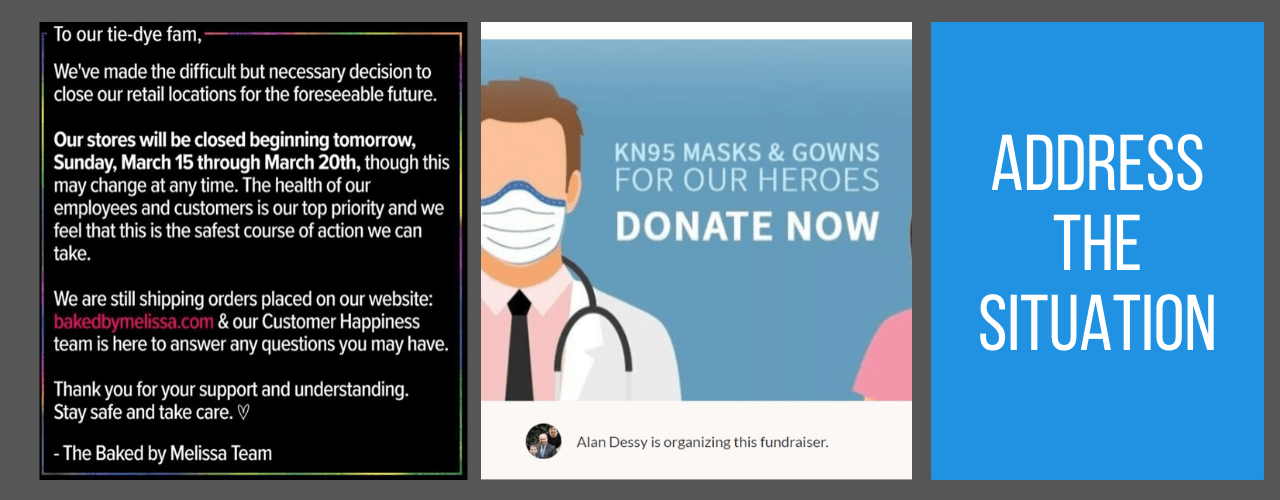
Of course, a company’s COVID-19 response need not be limited to business operations. In addition to its corporate email detailing delivery time frames, wedding apparel brand The Dessy Group pledged to donate protective gear to health workers. The company set up a GoFundMe where customers can pitch in to the cause.
Rework your marketing efforts
According to a WordStream report, COVID-19 has deeply influenced Google ads in more than 20 industries. Here are some notable findings from the report:
- There is a 14% drop in retail search ads conversion rates
- Google conversion rates decline by 21% on average
- Google search ad impressions go down by 7% below average
- Mobile traffic decreased by 24% in March
With normal shopping and internet browsing behavior going out the window, it’s only fitting to rework your marketing plan.
Easy Tiger Goods, a concept store that sells home decor items and paper products struck the balance between social relevance and creative marketing. Using Instagram, the brand posts beautiful product photos with witty captions. The posts also give people ideas on how to stay occupied or how to adjust to working from home using Easy Tiger Goods products. Like many others, the company closed its physical stores temporarily and only functions online now. However, Easy Tiger Goods offers free shipping when customers use its very timely code strongertogether.

Transform your business model
Chinese beauty brand Lin Qingxuan was one of the many businesses first hit by the economic impact of COVID-19. The company was forced to close nearly half of its storefronts and they experienced a 90% sales drop around Chinese New Year. However, tough times also force entrepreneurs to think outside the box — or their business model. Lin Qingxuan redeployed hundreds of their in-store beauty advisors online. The beauty advisors live-stream product recommendation sessions in e-commerce channels and offer personalized customer service through DingTalk and WeChat.
Events company Yaymaker also pivoted its business model to adapt with the times. Specializing in organizing social functions and activities, the company has turned its in-person events into virtual experiences. Yaymaker now has a streaming platform where participants can do various activities ranging from private parties to corporate events where companies touch base with their team. Parents can also use Yaymaker to provide educational and entertaining activities for kids.
Introduce interactive experiences online
With people being required to isolate, the desire for social activities grows stronger by the day. Help your customers cope with self-isolation by creating social experiences online. Fitness studio YMCA now hosts online fitness classes to help people stay active and healthy while at home.
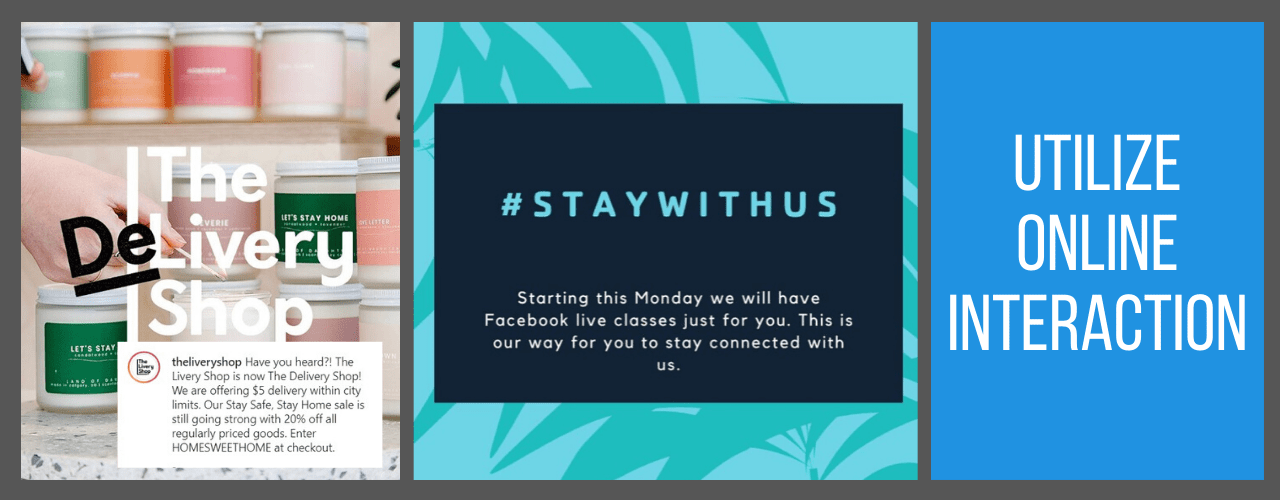
Although their storefronts have closed, apparel brand The Livery Shop is still open online and offers customers a virtual showroom. Through their Instagram Stories, the brand posts multiple outfit ideas to recreate the experience of trying on clothes in store. This also helps online shoppers to make quicker purchase decisions.
Support your employees
Your company is as strong as the team working behind it. To continuously support your employees, know the different provisions given to retailers and small business owners in response to the pandemic. Apart from financial assistance, the Small Business Administration also offers guidance on how to maintain health safety in the workplace.
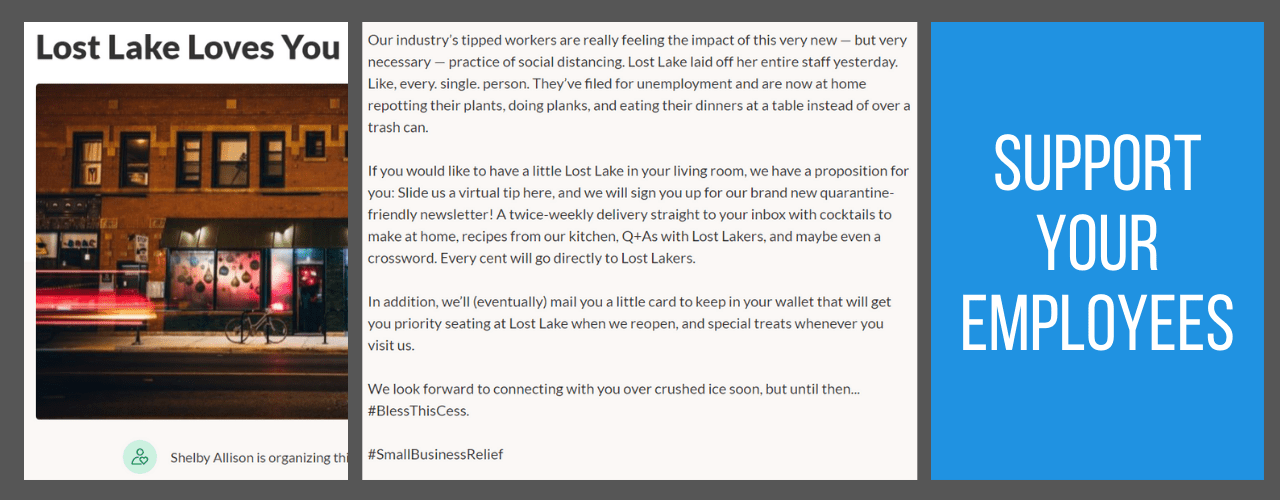
Momentum Worldwide, a branding agency, shows support to its employees by giving them access to nutrition, fitness, and mindfulness resources. When Chicago-based cocktail bar Lost Lake was forced to lay off employees, the company persisted to find other ways to support their staff. The company set up a GoFundMe account to virtually tip baristas and crew. In return, Lost Lake sends donors bi-weekly newsletters containing tips on how to make cocktails at home, recipes from the bar’s own menu, crossword games, and other activities.
As an entrepreneur, you have skills that are innate and skills that you pick up along the way. Ultimately, it’s the latter that would help your company survive when things get tough. Keep these companies’ initiatives and creative solutions in so that you too can learn how to operate business online in COVID-19 times. Need additional input? Use this COVID-19 guidance for business.
[activecampaign form=68]READ MORE
COVID-19 guidance for business

A looming stock market crash, worldwide travel restrictions, school and business closures, full-on community lockdowns — these are just the visible repercussions that the COVID-19 has brought upon the entire world.
The novel coronavirus pandemic has only been around for a few months, but it seems to have put the world to a standstill. With establishments forced to close or reduce operating hours, entrepreneurs are scrambling for some COVID-19 guidance for business operations.
COVID-19 Information for Business Owners
Apart from its detrimental health effects both physically and psychologically, the COVID-19 pandemic is sure to leave severe economic repercussions in its wake. In fact, a research in Canada showed that people fear the economic impact of the virus more than its health ramifications.
What does this mean for businesses?
A separate study showed that over 80% of adults from all over the world think that businesses should be held responsible for their workers and community amidst the pandemic. This responsibility includes protecting workers from the virus and maintaining a sustainable community.
[activecampaign form=68]
As a business owner, you need a solid plan to meet these expectations and quench the growing fear in your community and among your staff. But what if the situation is leaving you with some doubts yourself? This is especially true for small business owners with small budgets that leave little room for contingencies.
To keep your business afloat during this time of crisis, you need to have a solid business continuity plan.
7 Tips on How to Make Your Small Business COVID-19 Ready
How do you keep your small business going when everywhere you look, businesses are forced to either reduce their hours, pause operations, or shut down completely? By not resorting to panic. It’s important to keep a clear head and approach the matter with foresight and as much knowledge about the situation as possible.
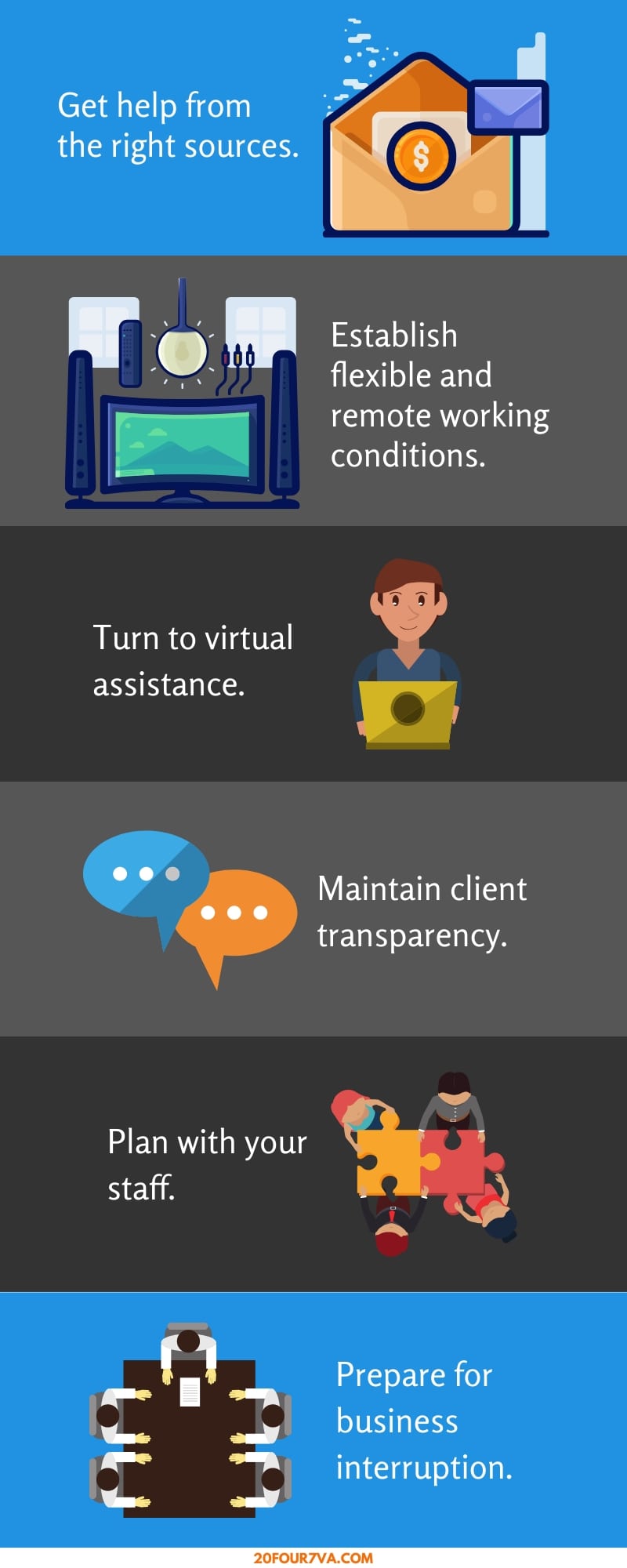
It’s not too late to secure your business amidst the pandemic. Here are 7 tips on how to make your small business COVID-19 ready:
-
Get help from the right sources.
Government officials are rallying to help business owners keep themselves, their customers, and their employees healthy. In the US, SBA (Small Business Administration) has collaborated with local partners so that entrepreneurs can access business counsel and financial assistance. SBA also developed LenderMatch, a tool connecting business owners with SBA-approved lenders in just 2 days. To ensure you are only getting credible COVID-19 Information for Small Business, check out the SBA guidance for loans and other resources here.
-
Establish flexible and remote working conditions.
As more and more local governments order community quarantines and lockdowns, companies have turned to remote work as an ideal business solution. With your in-house staff, transition to work from home using the different tools and software for remote collaboration. Check out these 6 tools for remote team management for some inspiration. Remember to establish working hours and designate projects from the get-go.
-
Turn to virtual assistance.
Now is the best time to switch some, if not all, of your operations virtually. There are various tools and platforms to help businesses with inventory and order management, shipment, and administration. Virtual assistance will not only keep your business afloat; it will also help you maximize your budget by reducing operational costs. Check out these 5 business expenses you can reduce by hiring a virtual assistant.
TIP: Worried about service delays, admin, HR and payroll difficulties, or unreliable virtual assistants? Don’t be! Partner with a full-service virtual staffing company like 20four7VA so you can find a suitable virtual assistant in just 48-72 hours. A full-service virtual assistant provider also handles several key hiring, management, and payroll functions, so you won’t have to worry about having a difficult transition.
-
Maintain client transparency.
According to Harvard Business Review, customers are less likely to appreciate and support a business that keeps them in the dark. As people are growing anxious and confused, make sure your customers know what to expect from your business. Let your customers know what precautions and safety measures you’ve adapted to keep them and your services safe, your workplace sanitized, and your workers healthy. Post your operating hours on your website and social media, promptly answer concerns, and update your customers for any changes regarding your business.
-
Explore new ideas.
It may sound counter-intuitive but according to entrepreneur Mark Cuban, now is a great time to experiment with new ideas. You don’t necessarily need to launch a new product line; just consider what current needs you can service. The Body Shop, for example, found a great way to help their customers amidst viral infection and shortage of disinfectants. The company introduced different ways that people can use existing Body Shop products for sanitation and virus protection.
-
Plan with your staff.
Lead with compassion and be honest about your situation. Ask your team for ideas on how you can weather downturns, especially if you’re making decisions that affect their circumstances. Bring your team together to come up with solutions for short-term and long-term issues. You can even conduct emergency planning exercises to prepare, respond, and recover from the different ways the pandemic can affect your business.
-
Prepare for business interruption.
Although the plan is to continue operations, it’s still crucial to cover your bases for business interruption. Contact your insurance provider to review or update your policy. Make sure that you understand how you are covered for business interruption so you can act accordingly.
Follow these 7 steps for businesses during COVID-19 to protect your company and keep operations going. If you’re looking to hire a virtual assistant to help your business, we’d love to assist you with the transition. Click here to schedule a FREE, no-obligation consultation call with us.
[activecampaign form=68]READ MORE