5 Types of Internet Marketing You Need to Know
[vc_row][vc_column][vc_column_text css=”.vc_custom_1702386982738{margin-bottom: 0px !important;}”]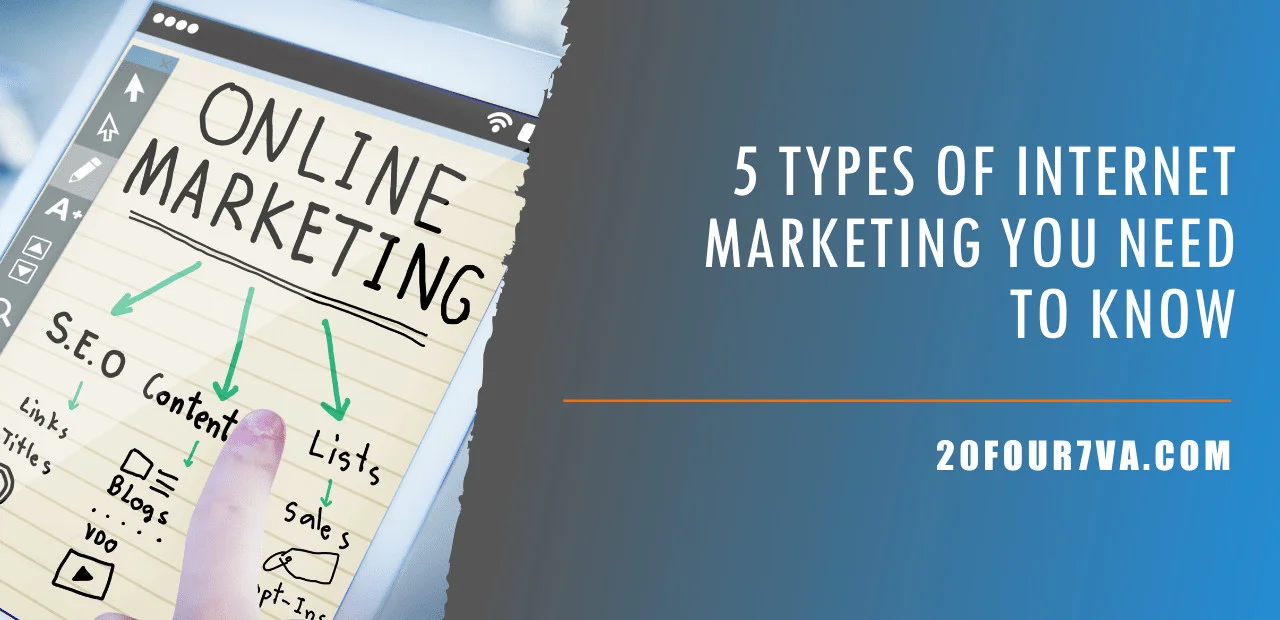
Consumer behavior and marketing channels are so closely related that they often affect each other. The evolution of marketing from print advertising in the early 90s to TV and radio broadcasting in the mid-90s, and then finally to internet marketing shows that.
Unlike traditional advertising that only consists of 4 categories (print, broadcast, phone, and direct mail), internet marketing is still evolving. In fact, online marketing is just as dynamic as the behavior of the consumers. As the demands and preferences of people evolve, internet marketing also takes on various forms.
What is internet marketing and why should you know about it?
Internet marketing, also known as web marketing or online marketing, is the collective term for promotional activities or campaigns carried out online. As the channels where these campaigns are conducted expand, internet marketing continues to grow.
Entrepreneurs need to step up their game and be constantly on the lookout for what’s new in the field so that their business doesn’t get left behind. It may sound tedious, but doing business today is virtually impossible otherwise. In fact, internet marketing has evened out the playing field when it comes to reaching out to consumers and increasing brand awareness.
[activecampaign form=68]
So, what are these branches of marketing that made the world a little smaller for both business and buyer? Have a look at the 5 types of internet marketing you need to know:
1. Search Engine Optimization
For several years now, Search Engine Optimization has been instrumental in putting many small businesses on the map. SEO is the process by which companies improve their websites and content so that their web pages get a high website ranking in Google and other search engines.
Why it’s important:
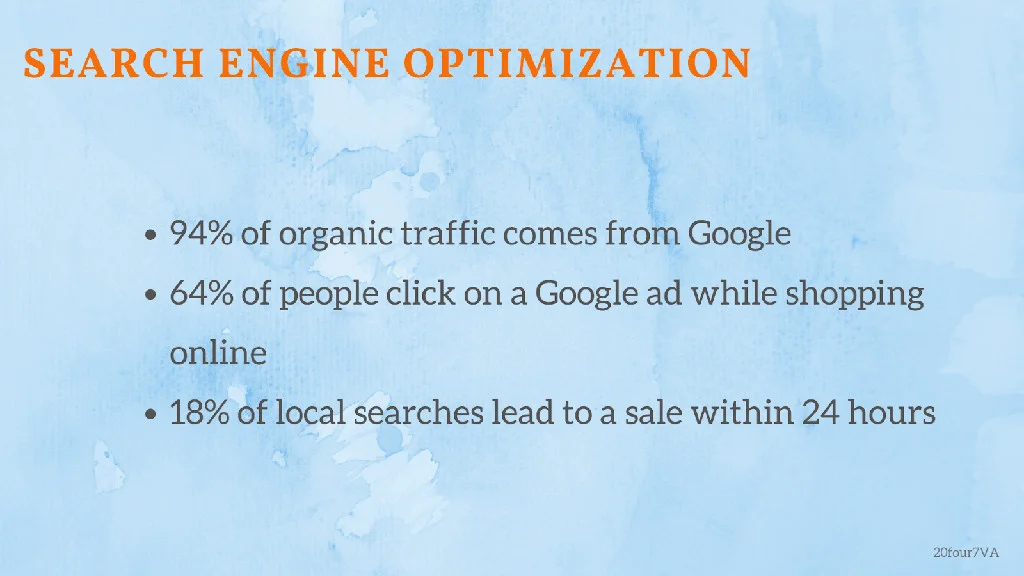
- 94% of organic traffic comes from Google
- 64% of people click on a Google ad when shopping online
- 18% of local searches lead to a sale within 24 hours
Because website marketing is the core of SEO, you can optimize your site by:
- Publishing industry-relevant and customer-centric blog posts
- Investing in local search
- Ensuring web pages load within 2 seconds
- Using a website design that looks great on all types of screens or devices
- Using title tags and meta descriptions
- Incorporating content with links to other pages of your blog
- Adding links to other relevant websites or resources
Recommended Reading: 3 Tips for Local SEO Success
2. Content Marketing
Content marketing is the process of creating and distributing engaging, useful, and keyword-enriched content to a target audience. The goal of content marketing is to build regular readership and push profitable actions including purchasing and content sharing.
Why it’s important:
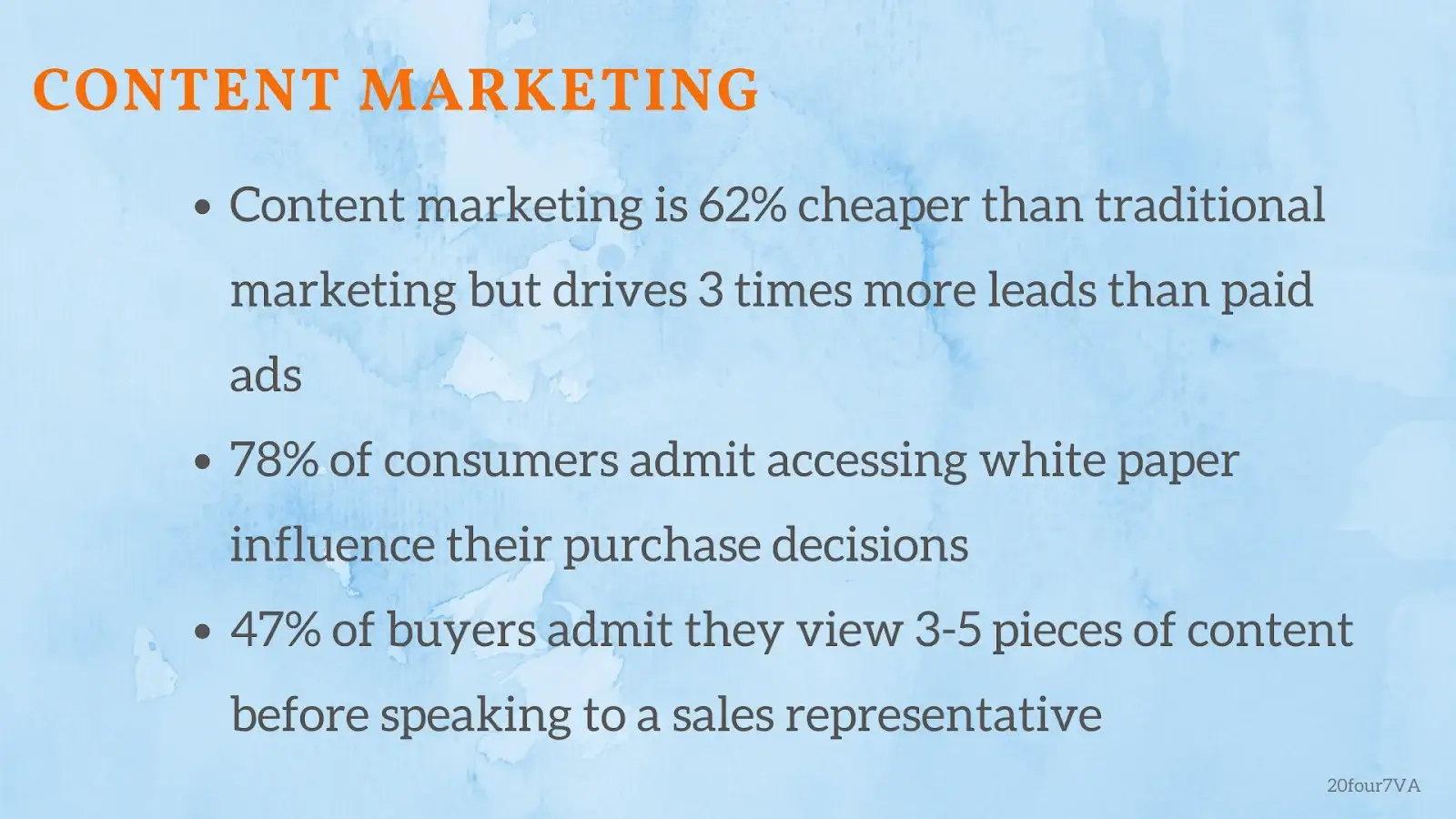
- Content marketing is 62% cheaper than traditional advertising but drives 3x more leads than paid ads
- 78% of consumers admit that white paper (content such as eBooks) influenced their purchase decisions
- 47% of buyers admit they view 3-5 pieces of content prior to speaking to a sales representative
Unlike paid ads that promote temporarily relevant campaigns, this type of marketing adds repeat value to a website or page. When done right, people will keep coming back to your page or share what they’ve read to others. These activities can bump a website higher in search engine results.
Below are some useful content marketing tips:
- Create a content calendar for a structured and regular posting plan
- Have a clear customer persona and create posts centered on their goals or pain points
- Research keywords that people mostly use when searching for your line of business
- Research industry-related news to post updated content and establish authority
- Invest on producing quality visual content (infographics, images, and videos)
- Re-purpose popular content into eBooks, webinars, videos, or social media posts
TIP: Work with a content writer VA to help you put together content that will fare well with both the search engines and the readers. Content writers are specialists when it comes to creating keyword-rich posts that make a good read.
3. Social Media Marketing
Initially created to help people keep in touch with long-distance family and friends, social media channels have snowballed into a huge marketing arena in just a few years. The aim of social media marketing is to increase sales, boost website traffic, and win more customers through channels like Facebook, Instagram, Pinterest, and Twitter.
Why it’s important:
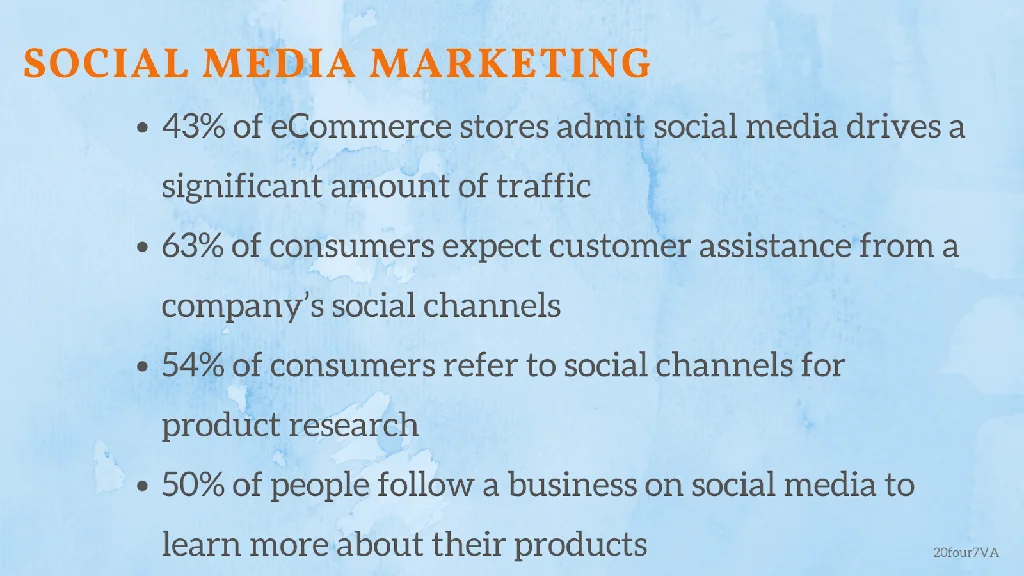
- 43% of eCommerce businesses admit that social media is instrumental in driving traffic to their online store
- 63% of consumers expect customer assistance from a company’s social channels
- 54% of consumers refer to social channels for product research
- 50% of people follow a business on social media to learn more about their products
The more social platforms emerge, the bigger social media marketing becomes. Here’s how to take charge:
- Research about the social media sites frequented by your target customers to know your priority channels
- Post engaging content regularly
- Respond to comments, mentions, and direct messages
- Consider your social channels as customer service platforms
- Hire a social media manager to schedule posts and reply to communications promptly
- Post links to your eCommerce store or blog posts
Social media is steadily becoming a central platform for brand and product research, that you can now take its influence offline. Here’s how to turn social media influence into in-store transactions.
Recommended Reading: A 4-Part Social Media Marketing Strategy for Beginners
4. Email Marketing
Email marketing has been around a long time, but the surge of social media has somewhat diminished its popularity. Perhaps because of limited funds, startups channel their investments to social media and search marketing instead of emails. Don’t make the same mistake.
Why it’s important:
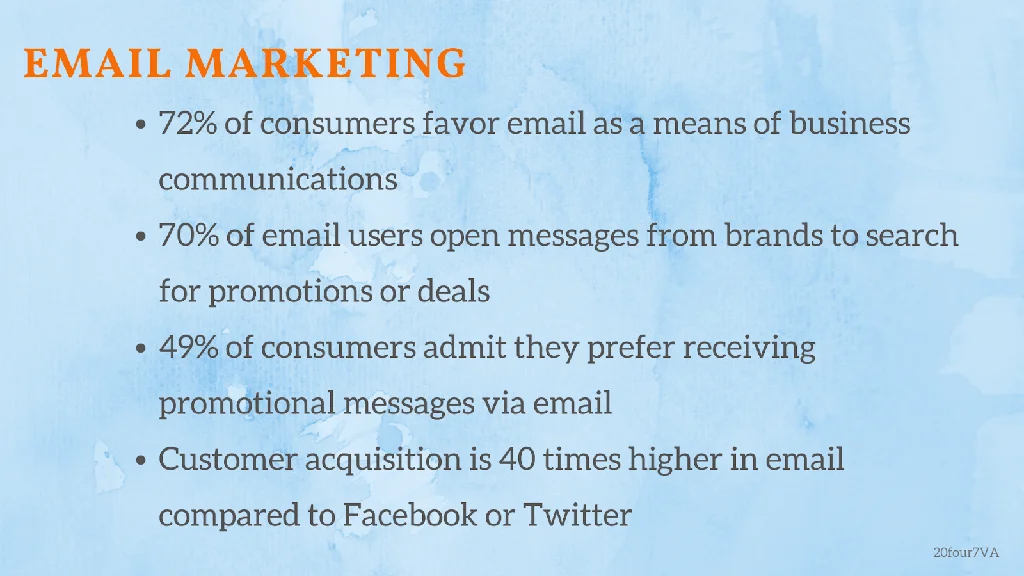
- 72% of consumers favor email as a means for business communications
- 70% of email users open messages from brands to search for promotions or deals
- 49% of consumers admit they prefer receiving promotional messages from their favorite brands via email
- Customer acquisition is 40x higher in email compared to Facebook or Twitter
Here are email marketing rules to keep in mind:
- Update your email list regularly
- Personalize your emails, from the To and From fields to the content and signature
- Mention a benefit or promotion within the first 20 words of your message
- Include a clear call-to-action
There are more email accounts than there are Facebook and Twitter profiles combined, so it’s only fitting to leverage email to your advantage. Besides, email marketing is significantly cheaper compared to other platforms. For instance, you can use providers like MailChimp to send up to 12,000 emails to 2,000 subscribers for free. Also, because email is easily integrated with other platforms, you can use it in combination with your social media and blog campaigns. Here are 6 other ways to achieve email marketing success.
5. Paid Advertising
As the name suggests, Paid Advertising is when marketers pay platforms like Google, YouTube, and Bing to display their ads.
Why it’s important:
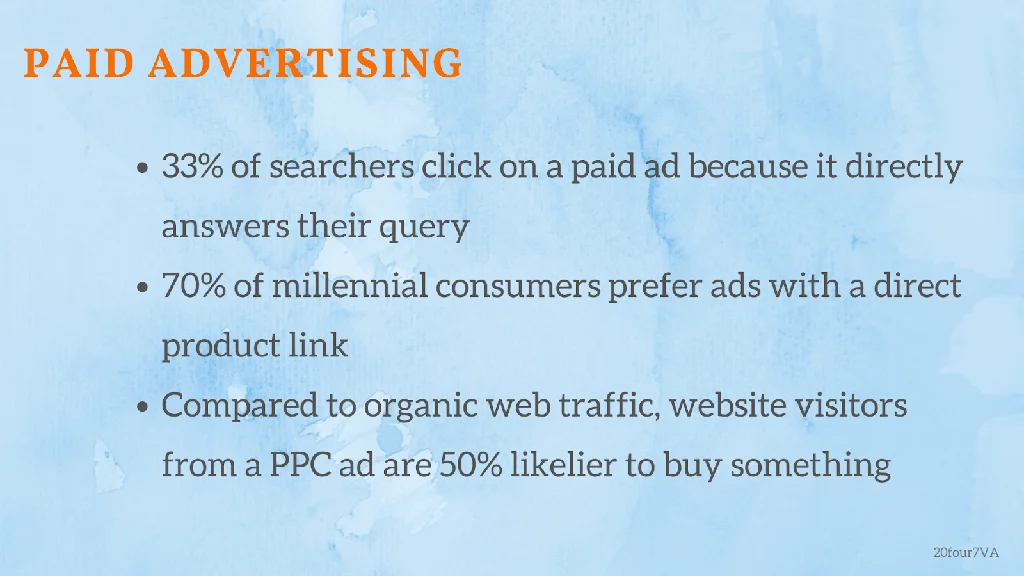
- 33% of searchers click on a paid ad because it directly answers their query
- 70% of millennial consumers prefer ads with a direct product link
- Compared to organic web traffic, website visitors from a PPC ad are 50% more likely to buy something
Paid Advertising is often used interchangeably with PPC (Pay-Per-Click), where brands pay a certain amount each time someone clicks on their ads. However, there’s more to this side of web marketing than that.
Here are the most common types of paid advertising today:
- CPA (Cost-per-action or acquisition) when brands are charged every time a user does a specified action or turns into a customer
- CPM (Cost-per-mille) when brands are charged after their ads hit 1000 views
- CPV (Cost-per-view) when brands are charged for every video view
BONUS:
Thanks to social media, another type of internet marketing is creating waves today: Influencer Marketing.
A straightforward and mutually beneficial process, Influencer Marketing is when brands collaborate with influencers to promote their products on certain platforms. Although they can also be mainstream celebrities, influencers are mostly people with a large following on social media or have an established authority in a specific niche.
Why it’s worth looking into:
- 89% of marketers report that influencer marketing is better or comparable to other marketing platforms
- 82% of consumers say they are highly likely to patronize brands recommended by an influencer they follow
- 49% of consumers say they depend on influencer recommendations for purchase decisions
The vastness of online marketing can be overwhelming. But if you want to raise brand awareness, increase your sales, and acquire more customers, you need to harness this ever-changing and ever-expanding tool. Knowing these 5 types of internet marketing is a great place to start.
[activecampaign form=68][/vc_column_text][/vc_column][/vc_row] READ MOREContent Marketing Tips for Beginners
Starting your own small company can be daunting in itself. What more if you have to learn about different online marketing strategies for small business owners? Take content marketing. It can certainly be overwhelming to learn everything about this subject. However, you don’t need to worry about grasping all relevant concepts. Focus on a few simple tactics and learn as you go along.
What is content marketing? Is it really worth it?
Content marketing is basically any type of marketing that involves the creation and sharing of various forms of online content such as blogs, images, videos, etc. If you’re looking to increase your website ranking on Google, you should consider paying close attention to your content marketing strategy. However, this kind of marketing is not about promoting your brand as it is sparking interest in your products or services.
It’s also important to note that while content marketing does not directly contribute to sales, its role in the lives of consumers is apparent in all stages — from researching and educating themselves about the available options to the actual purchasing of products or services.
Content marketing also helps cultivate customer loyalty. Once you’ve established your authority, they’ll keep coming back to you for more info. It becomes almost automatic for them to turn to you when they have questions. This is awareness on their part — they simply know that you’re there.
5 content marketing hacks
In one of The Recipe for SEO Success’ podcasts, SEO copywriter and consultant Kate Toon talked about her favorite content marketing hacks. James Norquay, who has been doing digital marketing in Australia and the US for over 11 years, also joined in to share other tips and advice.
The two have created a meaty list of easy content marketing hacks for beginners, and here are five of them.
-
Create long-form content.
Quality will take you farther than quantity. Coming up with one lengthy, comprehensive article would be better than producing multiple content that aren’t as thoroughly crafted. To give you a better idea on what topics to cover, you should look in your own industry. See what your competitors have done and aim to do better. Think of how you can make the best piece of content that will entice users to share.
-
Get influencers on your blog.
Feature an industry expert on your blog and ask them if they could share your content to their followers. You might instantly think of getting a big shot with thousands of followers, but you should be prepared for the possibility that they won’t share your content — or worse, ignore your request. In this case, you might want to tap those that have less followers since they usually tend to have more solid following although smaller in numbers.
-
Use survey data to create content.
FGDs are almost a thing of the past. Using software or online tools like SurveyMonkey or Google Consumer Surveys is a more practical method these days. It also enables you to reach out to people in your email list. However, make sure that you’re formulating questions that are relevant to your business and that people would want to know the answer to. This way, your respondents would be more engaged in answering them, and you’ll get more reliable results and conclusion for your piece.
-
Write case study-based content.
Case studies can be in the form of written content or video. They easily show your potential customers actual examples of what you can do to help them with their needs.
-
Produce comparison-based content.
Create content wherein your brand goes head-to-head with a competitor. Make comparisons based on pricing and various options offered by both businesses. This wouldn’t work for service providers, though. Comparison-based content will be more effective for businesses that have products with specific features that can be qualified — for instance, mobile phones being compared based on their operating systems, storage capacity, etc.
Of course, don’t forget or hesitate to promote the content you’ve worked hard to create. Share them on your social media pages and share them with the people on your email list.
Next: Email Marketing Get To Know The Basics
20Four7VA recognizes the challenge of effectively managing an online business – and we are very eager to help. Our company specializes in eCommerce VIRTUAL STAFFING SOLUTIONS, providing customizable and scalable solutions to small, medium, and large enterprise business owners so they can focus on growing their business.
Ready to have access to incredible people with incredible skills in the most cost-effective way? Give us a call at our toll free number 1 (443) 856-4882 today!
READ MORE